Activities
The ultimate guide to aesthetic and plastic surgery clinics in Marbella (2026)

Choosing a clinic in Marbella stopped being a question of reputation in 2026. Since 1 July, Spain has applied regulations that redefine who may operate and what each centre must document, and that completely changes the questions a patient should be asking before booking a first consultation.
Marbella remains one of Europe’s reference points for aesthetic medicine and plastic surgery: climate, discretion, internationally trained professionals and a tourism infrastructure that allows for a calm recovery by the sea. But the part almost no guide explains is how to check that the clinic you are looking at complies with what the law has required since this summer.
This guide covers both: the centres with a proven track record on the Costa del Sol, and the objective criteria for verifying them.
IMPORTANT NOTICE
This article is informational and does not constitute medical advice. No aesthetic procedure should be decided on the basis of web content: only a registered professional can assess your case, tell you whether you are a candidate, and explain the risks, alternatives and realistic outcomes after an in-person consultation.
What changed in July 2026: Spain’s new regulations
On 24 March 2026 the Spanish Council of Ministers approved an amendment to Royal Decree 1277/2003, which governs the authorisation of healthcare centres, services and establishments. The rule came into force on 1 July 2026 and responds, according to the Ministry of Health, to serious cases involving professionals without the necessary competencies.
What it establishes, in practice:
- Only doctors holding the corresponding official specialty may perform cosmetic surgery. Until now the rule allowed practitioners without a specialty to head aesthetic medicine units.
- Centres must hold updated, detailed records of the training and official specialty of all their clinical staff. They have six months from entry into force.
- Responsibility shifts to the centre: it no longer rests solely with the individual practitioner.
- Spain’s regions have one year to adapt their service catalogues to the new definitions of healthcare units.
The context explains the reform. The Spanish Society of Aesthetic Medicine warned in 2025 that around 65% of medical-aesthetic treatments in Spain were being performed by professionals without adequate qualifications, and that roughly 20% took place in unregulated settings such as hair salons or private homes.
Andalusia also has its own regional legislation. The Order of 3 April 2024 requires clinics to hold specific health authorisation for unit U.48 (non-surgical medical-aesthetic treatments), with defined structural conditions and visible display of the health registry number.
Source: Spanish Ministry of Health press release, 24 March 2026.
How to verify an aesthetic clinic in Marbella: 2026 checklist
These are the objective proofs you can request before a first consultation. A serious centre provides them without hesitation.
- Health registry number on display. In Andalusia it must be signposted within the centre itself. If you cannot find it, ask, and check the registration in the Junta de Andalucía’s register of healthcare centres.
- The surgeon’s official specialty, not just their experience. For cosmetic surgery, the MIR-route specialty in Plastic, Aesthetic and Reconstructive Surgery or another surgical specialty. This is exactly what the July 2026 rule requires.
- Verifiable medical registration. Every doctor must be registered with the provincial Colegio Oficial de Médicos. The registration number is public and can be checked.
- Scientific societies. Membership of SECPRE, ISAPS, ASPS, EBOPRAS or BAPRAS is not mandatory, but it indicates voluntary submission to standards and continuing education.
- Who administers the anaesthesia, and where the surgery takes place. Ask whether there is a qualified anaesthetist, whether the operating theatre is on site or at a partner hospital, and what happens if a complication arises out of hours.
- Written informed consent and a closed quote. It should specify the exact technique, the risks, what the price includes, and what happens if revision surgery is needed.
A post-operative follow-up plan. How many reviews are included, with whom, and what cover you have once you return home if you are an international patient
WARNING SIGNS
Be wary of any centre that pressures you with discounts for deciding the same day, that avoids giving you the name and specialty of the surgeon who will operate on you, or that offers surgery without a prior in-person consultation. A quote sent over WhatsApp based on a photograph is not a medical assessment.
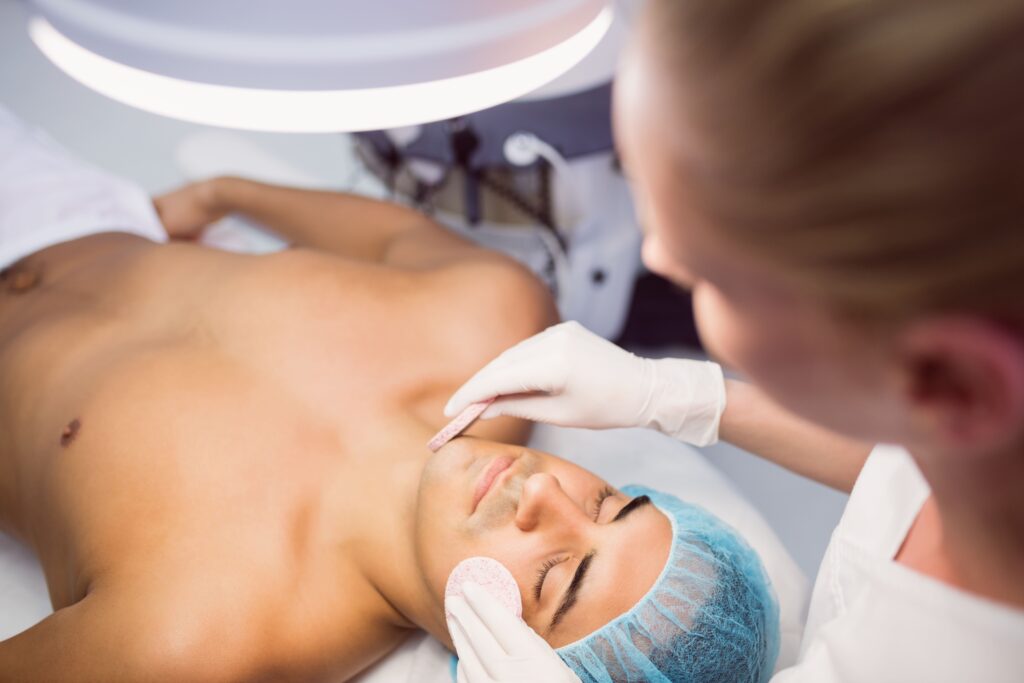
Leading aesthetic clinics in Marbella
A selection of centres with a proven track record on the Costa del Sol. Contact details verified on their official websites in August 2026. This is not a ranking or a medical recommendation: the right choice depends on your case and must be made in consultation.
Ocean Clinic Marbella
Led by Dr Kai O. Kaye, a plastic surgeon certified in Germany, Spain and the United Kingdom and an ISAPS expert member. The clinic occupies more than 900 m² across three floors in the historic centre, facing Parque de la Alameda, with two operating theatres, an intermediate-care recovery unit and a day-surgery area.
It brings plastic surgery, dermatology and aesthetic medicine together under one roof, with its own research department. Its surgeons belong to associations including VDÄPC, DGPRÄC, ISAPS, ASPS, EBOPRAS and BAPRAS. Dr Kaye is also the founder and course chair of MIPSS, the international plastic surgery symposium held annually in Marbella.
- Website: oceanclinic.net
- Phone: +34 951 775 518
- Address: Calle África 2, 29601 Marbella
Clínica Dr. Campos
With around three decades in Marbella, this is one of the historic names in aesthetic medicine and surgery on the Costa del Sol. More than 300 m² in central Marbella, with plastic surgery, aesthetic medicine and dental units.
Its medical director is Dr José Vicente Campos. The centre’s approach combines both disciplines, surgical and non-surgical, with a stated policy of not recommending surgery when the result can be achieved through aesthetic medicine. It also has a site in La Línea de la Concepción.
- Website: clinicadrcampos.com
- Phone: +34 952 821 811
- Address: Avda. Ricardo Soriano 65, 5th floor, 29601 Marbella
Cirumed Clinic Marbella
Founded and directed by Dr Alexander Aslani, specialising in advanced body contouring. Before establishing Cirumed, Dr Aslani headed the Plastic Surgery departments at Quirón Málaga and Quirón Marbella hospitals between 2008 and 2018.
The centre has two operating theatres and eight suites in a hospital setting. Dr Aslani is a collaborating member of the ASERF Task Force on Gluteal Fat Grafting Safety, the body that sets international safety standards for gluteal surgery: a relevant detail, since that is precisely the procedure with the worst worldwide record of serious complications when performed without the correct technique.
- Website: cirumed.es
- Phone: +34 952 775 346
- Address: Edificio Panorama, Autovía del Mediterráneo km 184, 29603 Marbella
HC Marbella International Hospital and HC Aesthetic
HC Marbella is a multidisciplinary private hospital with more than thirty specialties, 16 rooms, consulting suites and four operating theatres, one of them with a laminar flow system. Its Plastic and Reconstructive Surgery Unit works with international specialists.
The difference against a conventional aesthetic clinic is the hospital backing: if a complication arises, the patient is already inside a hospital with an emergency department and support units. In 2026 the group also launched HC Aesthetic, its dedicated plastic surgery and aesthetic medicine brand.
- Hospital website: hcmarbella.com
- Aesthetic clinic website: hcaesthetic.com
Quirónsalud Marbella
The hospital belonging to Spain’s largest private hospital group opened facilities in the Singlehome building dedicated entirely to plastic surgery, aesthetic medicine and dermatology. The opening brought professionals from Madrid’s Clínica Dermatológica Internacional to the Marbella centre.
As with HC Marbella, it offers the safety framework of a general hospital with a full portfolio of services.
- Website: quironsalud.com/marbella
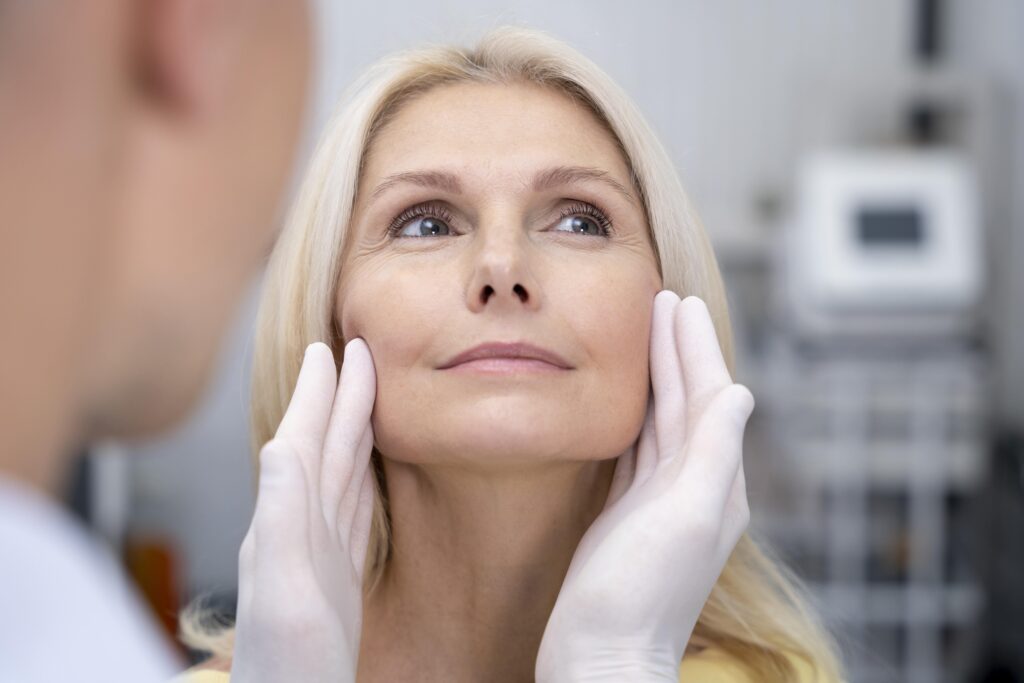
The most requested treatments in Marbella
These are the procedures most in demand among domestic and international patients on the Costa del Sol. The descriptions are informational: suitability is always individual.
Ultrasonic rhinoplasty
One of the most frequent facial surgeries. Ultrasonic technology allows bone to be reshaped with greater precision than classic techniques, which generally reduces bruising and shortens recovery. Many Marbella centres combine it with closed approaches. It is the option for those seeking subtle changes rather than an obvious transformation.
Minimally invasive face and neck lift
Endoscopic and mini-lift techniques aimed at restoring firmness without altering expression. They are frequently combined with lipofilling or laser to improve skin quality, seeking a more harmonious and longer-lasting result without resorting to aggressive surgery.
Breast augmentation and mastopexy
Breast surgery remains among the most requested, whether to increase volume, correct asymmetry or lift the breast. 3D simulators allow the result to be anticipated and expectations adjusted before entering theatre, which reduces later dissatisfaction.
High-definition liposuction and liposculpture
Energy-assisted techniques (VASER, BodyTite) that define body contour and improve skin retraction. In high demand among both men and women seeking a more athletic silhouette. They are not a treatment for obesity and do not replace weight loss.
Advanced abdominoplasty
Combined with muscle repair techniques, it is one of the most effective options for restoring the figure after pregnancy or significant weight loss. Progressive tension closure reduces tension on the scar and supports healing.
Combined surgery or “mommy makeover”
Combining breast surgery, abdominal surgery and liposuction in a single operation, with one recovery period. It requires reinforced safety protocols and multidisciplinary planning: longer surgical time means greater anaesthetic demand, and not every patient is a candidate.
Technology and safety: what to expect from a current centre
Most leading centres in Marbella now incorporate four elements worth checking.
- 3D simulation. Allows possible changes to be visualised before surgery and aligns expectations between surgeon and patient. It is as useful for deciding to operate as for deciding not to.
- Latest-generation laser equipment. Improves texture, tone and firmness without surgery, and is often combined with resurfacing techniques.
- Minimally invasive techniques. Micro-incisions, endoscopic approaches and energy-assisted devices, with less swelling and a faster return to routine.
- Personalised protocols. A plan adapted to each patient’s medical history and goals, which also means ruling out unnecessary procedures.
Many centres also offer comprehensive post-operative support: follow-up appointments, lymphatic drainage, aesthetic physiotherapy and nutritional guidance.

Planning your stay: what to know before booking
If you are travelling to Marbella for treatment, the logistics matter as much as the clinic. These are the points that most affect an accommodation booking.
- Your surgeon sets the duration, not the flight schedule. At the first consultation, ask how many days you need to stay in the area and when you are cleared to fly. Book accommodation after you have that answer, not before.
- Expect in-person reviews. Most surgical procedures require at least one or two follow-up visits before you are cleared to travel.
- You will need comfortable accommodation, not just beautiful. A lift, a ground floor or accessible bedroom, good climate control and proximity to the clinic matter more than the view during the first few days.
- A companion. Many centres require someone to accompany you for the first 24–48 hours after surgery under general anaesthesia. Factor that into the number of bedrooms.
- Summer is not always the best time. Heat, sun exposure and swelling do not combine well. Autumn and spring generally offer more comfortable recovery conditions on the Costa del Sol.
For a comfortable recovery close to the coast, browse our — ground-floor and lift-accessible options work best in the first days — and see what else the city offers in our .
Frequently asked questions
What changed in Spain’s cosmetic surgery law in 2026?
On 24 March 2026 an amendment to Royal Decree 1277/2003 was approved, in force from 1 July 2026. It establishes that only doctors with the corresponding specialty may perform cosmetic surgery, requires centres to keep updated records of the training and specialty of all their clinical staff, and shifts responsibility onto the centre rather than the practitioner alone. Centres have six months to adapt; Spain’s regions have one year.
How do I know whether a Marbella aesthetic clinic is authorised?
It must be registered in the Junta de Andalucía’s register of healthcare centres, services and establishments, and in Andalusia the health registry number must be visibly displayed within the centre itself. For non-surgical medical-aesthetic treatments, the clinic needs specific authorisation for unit U.48 under the Order of 3 April 2024.
What specialty must a cosmetic surgeon hold in Spain?
Since July 2026, performing cosmetic surgery requires the official specialty in Plastic, Aesthetic and Reconstructive Surgery or another corresponding surgical or medical-surgical specialty. In addition, every doctor must be registered with the Colegio Oficial de Médicos in their province. The registration number is verifiable.
How many days should I stay in Marbella after cosmetic surgery?
It depends entirely on the procedure and the individual patient, and only your surgeon can confirm it. Ask at the first consultation, together with the date from which you are cleared to fly, and book accommodation once you have that information.
Why is Marbella a destination for aesthetic medical tourism?
Because of the combination of internationally trained professionals, a stable year-round climate, discretion and a tourism infrastructure that allows for a comfortable recovery. Multilingual care is also standard in Costa del Sol centres.
Can cosmetic surgery be decided in an online consultation?
No. A serious assessment requires an in-person examination, a review of your medical history and pre-operative tests. A quote issued from a photograph sent by messaging app is not a medical assessment, and is a clear warning sign.
What should a cosmetic surgery quote include?
The specific technique, the fees for the surgical team and the anaesthetist, theatre use, materials, the post-operative reviews included, and the terms if revision surgery becomes necessary. It should be provided in writing alongside the informed consent.
What is the best time of year for surgery on the Costa del Sol?
Autumn and spring are generally more comfortable than summer: heat and sun exposure do not favour healing or help with swelling, and compression garments are far more bearable in mild temperatures.
Book your stay in Marbella
If you are being treated at a Marbella clinic, accommodation is part of the recovery. Banús Rentals curates villas and apartments in Puerto Banús, Nueva Andalucía, Marbella East and the historic centre, with the discretion, comfort and proximity to the main medical centres that a stay of this kind requires.
Our team coordinates airport transfers, long stays and bespoke services, so you can concentrate on what matters.
Discover our holiday rentals in Marbella or speak directly to our team on +34 636 916 917.